
Industry News
Content
Two pallets of clumping clay litter can leave the same plant in identical ten litre bags and still differ by more than a kilogram per bag. The label rarely explains why. Bulk density does, and it drives clump strength, dust, fill weight, container payload and the shelf price a brand can defend.
Bentonite cat litter density is quoted in grams per cubic centimetre, but the number describes two different things: the density of the mineral grains themselves, or the density of the loose granule bed poured into a bag. Confusing the two is the main reason a density specification fails to match what arrives at the warehouse.
Definition: bulk density of cat litter is the mass of a loose, freely poured sample divided by the total volume it occupies, including the air space between granules. It is reported in g/cm3, where 1 g/cm3 equals 1000 kg/m3, and it is always lower than particle density.
In a typical sodium bentonite clumping litter, particle density sits at 2.4 to 2.6 g/cm3 while the poured bulk sits near 0.80 g/cm3. Roughly two thirds of the bag is air.
Bentonite cat litter has three densities that matter commercially, and they are not interchangeable: particle density, loose bulk density and tapped bulk density.
The solid montmorillonite itself, measured by pycnometer. It identifies the material, not the behaviour in a litter box.
The working number for packaging and freight: a one litre poured sample, levelled and weighed without tapping.
The same sample after a defined tapping sequence, approximating how litter settles after sea freight.
The gap between particle and bulk density is void space. Rounded granules hold far more air than compacted powder, so granulating a clay lowers bulk density even though the mineral is unchanged. Swell index, measured in millilitres of swollen clay per 2 g, remains the better predictor of clump hardness, and a good clumping grade reaches 20 to 30 mL/2 g.
Practical note: a supplier who quotes one density figure without saying loose or tapped, wet or dry, is offering a marketing number rather than a specification.
Across commercial litter materials, loose bulk density runs from about 0.40 g/cm3 for silica gel crystals to roughly 1.05 g/cm3 for dense non-clumping mineral sand, with clumping bentonite in the middle at 0.75 to 0.90 g/cm3.
| Material | Particle density (g/cm3) | Loose bulk density (g/cm3) | 10 L bag weight (kg) |
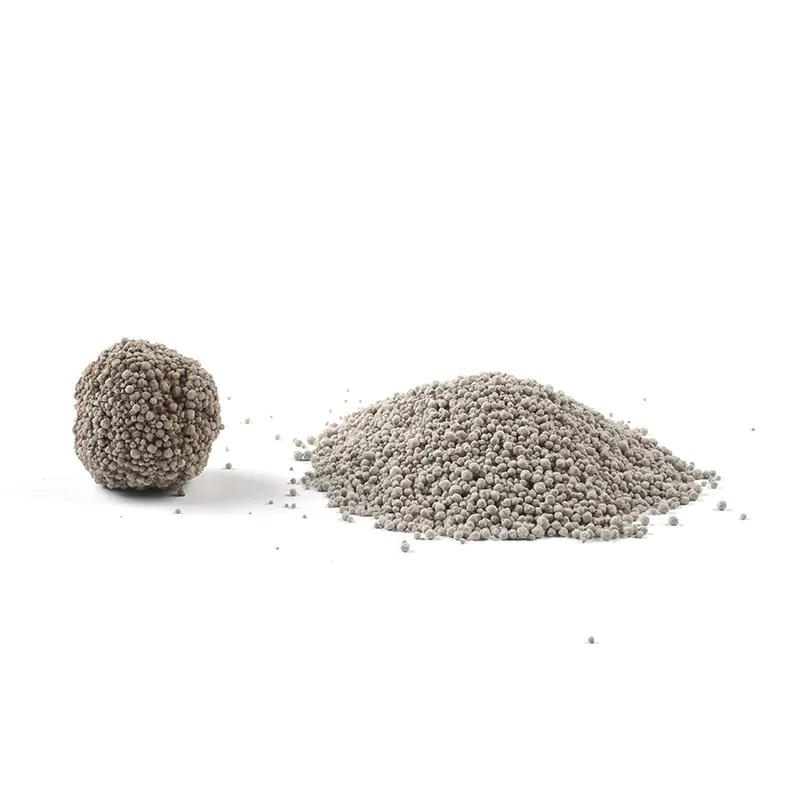
| Sodium bentonite clumping litter | 2.4 - 2.6 | 0.75 - 0.90 | 7.5 - 9.0 |
| Non-clumping mineral clay | 2.5 - 2.7 | 0.85 - 1.05 | 8.5 - 10.5 |
| Silica gel crystal litter | 1.9 - 2.2 | 0.40 - 0.55 | 4.0 - 5.5 |
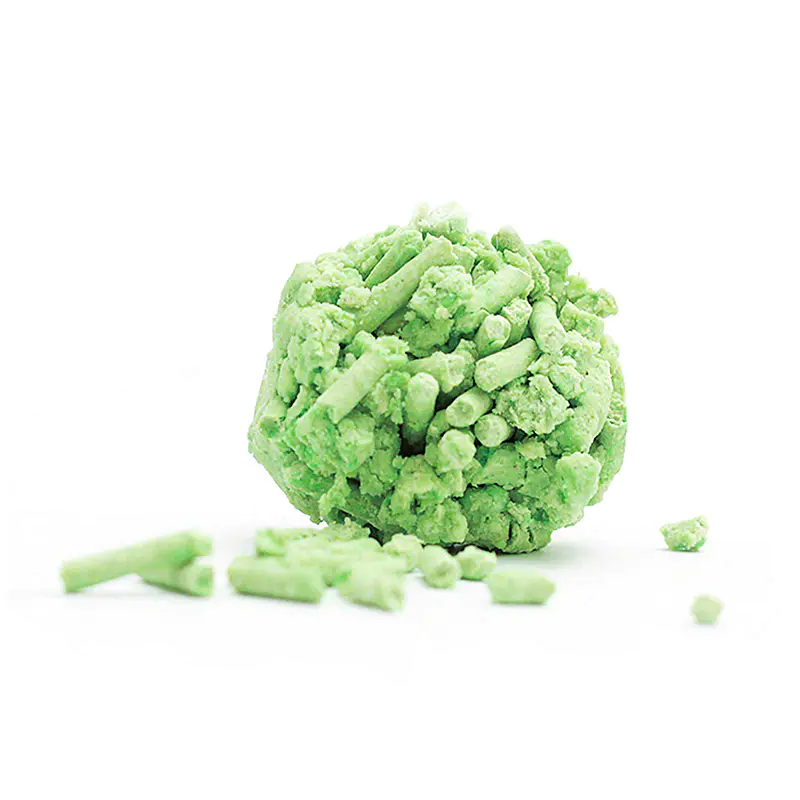
| Tofu and plant fibre litter | 1.3 - 1.5 | 0.55 - 0.70 | 5.5 - 7.0 |
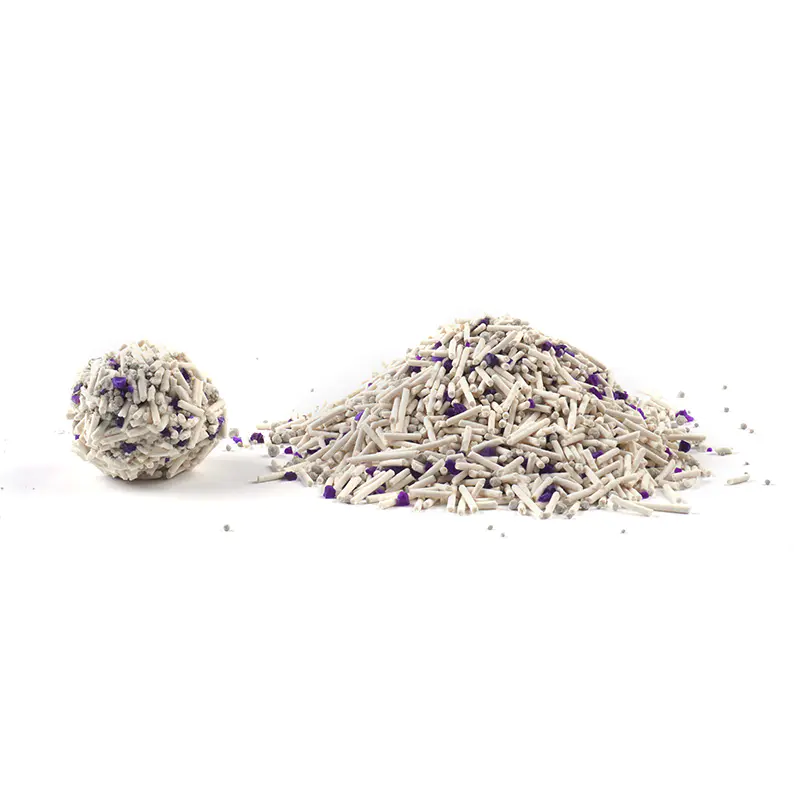
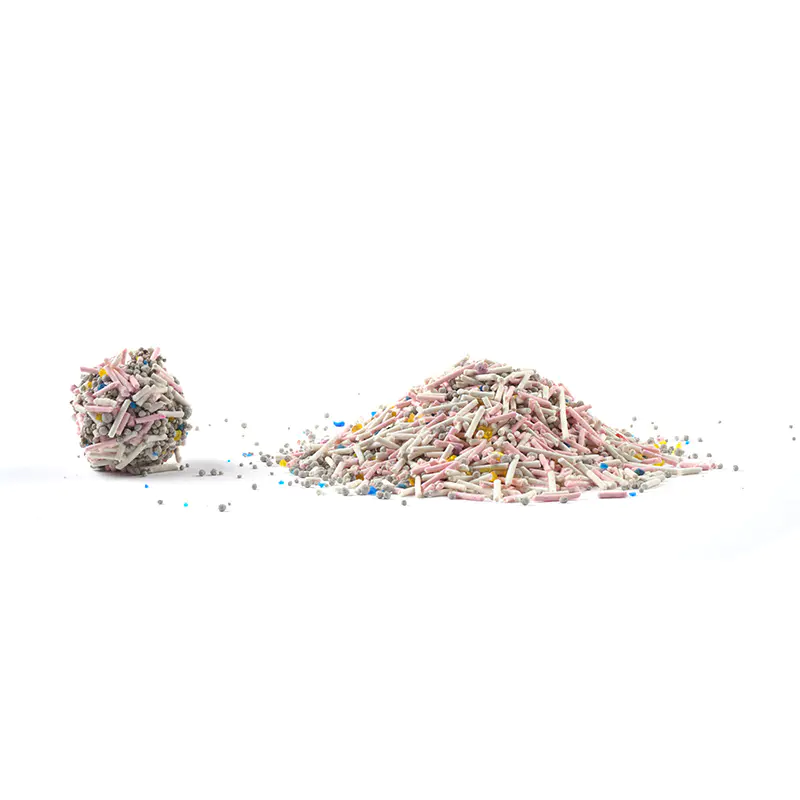
| Mixed litter blends | 1.8 - 2.4 | 0.65 - 0.85 | 6.5 - 8.5 |
Three factors explain movement inside the bentonite range. Source clay varies in sodium content and in non-swelling minerals. Granulation changes particle shape and size distribution. Moisture at packing changes both mass and flow, so a batch packed in a humid week runs heavier than the same recipe packed in a dry one.
Rule of thumb: on a fixed fill volume, an eight kilogram bag of clumping bentonite needs a poured bulk density near 0.80 g/cm3. At 0.70 g/cm3 the same bag holds seven kilograms.
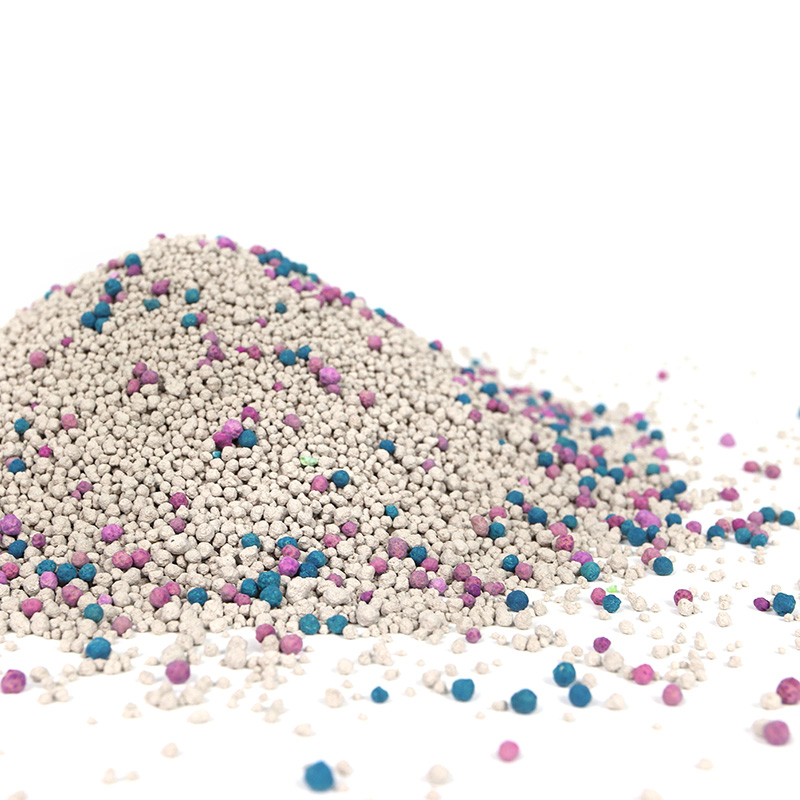 Eco-Friendly Strong Absorption Bentonite Cat Litter for OEM WholesaleWholesale bentonite cat litter with ≥250% absorption, 3-second clumping, and OEM customization; bulk density drives fill volume and landed cost.View Product →
Bulk density, not particle density, decides how many litres of litter fit into a container and how much a filled bag weighs, so it drives landed cost per litre far more than the price per tonne does.
A twenty foot general purpose container holds about 33 m3 and is normally limited to roughly 21.7 tonnes of payload. Dense litter reaches that weight ceiling long before the box is full.
At 700 kg per m3 the payload limit arrives at about 31 m3, so the container is roughly 94 percent full and carries about 31,000 litres of litter.
At 850 kg per m3 the payload limit arrives at about 25.5 m3, leaving the container about 77 percent full and carrying roughly 25,500 litres.
That is close to 5,500 litres per container, or about 18 percent more product on the same freight bill, which usually outweighs a ten percent difference in ex-works tonne price.
Retail logic runs the same way in reverse. A bag filled to a weight target overfills or underfills with the day's density, while a bag filled to a volume target drifts in weight. Buyers comparing lighter materials with clay should review these lightweight litter density trade-offs before switching specifications.
Freight rule: in clumping bentonite, lowering poured bulk density by 0.05 g/cm3 usually puts more saleable litres in a container than a ten percent discount on the raw material price.
Four process variables account for most of the batch to batch spread in bentonite cat litter bulk density, and three of them are decided before the bagging line.
The practical consequence is that density cannot be specified in isolation. A tight density band plus a wide sieve band will contradict each other in production, and the plant ends up adjusting one to protect the other.
Sourcing tip: hold density within plus or minus 0.03 g/cm3 against a fixed sieve specification. Tighter than that forces constant moisture correction and costs more than the freight it protects.
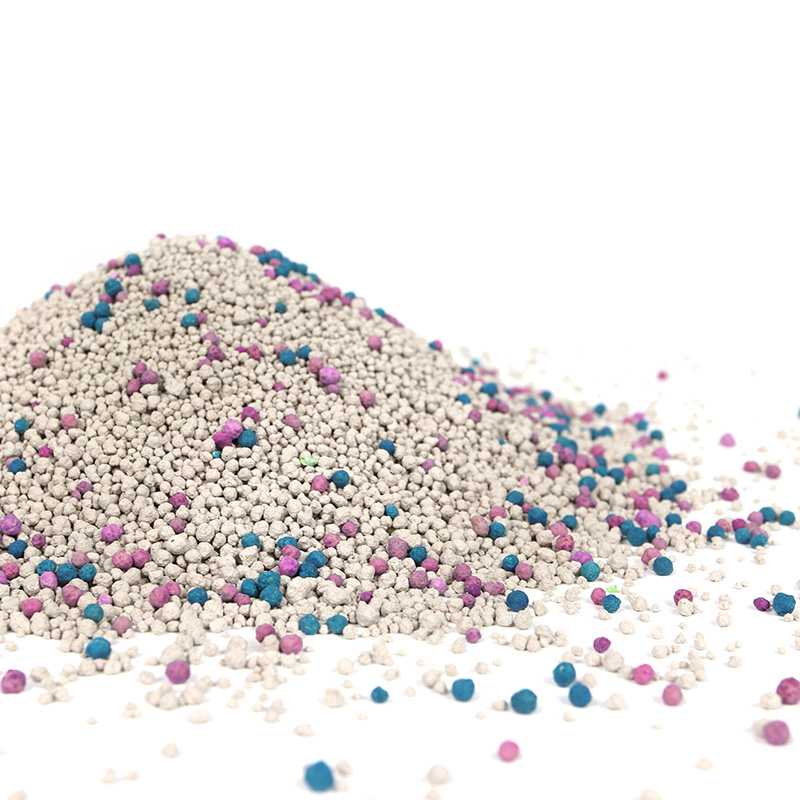 0.3-3.8mm Premium Natural Bentonite Cat Litter for WholesalePremium natural bentonite cat litter, 0.3-3.8mm spherical particles, ≥250% absorption, 3-second clumping; consistent density aids sourcing.View Product →
Bulk density is only comparable when the method is identical, so a useful number always travels with three details: sample state, pour method and a note on tapping.
Reporting standard: quote loose bulk density in g/cm3 at a stated moisture, add the tapped value only when packing behaviour matters, and always name the test method on the certificate.
The most common mistake is measuring tapped material and comparing it with a competitor's loose figure. The second is measuring a small scoop, where wall friction in a narrow container pushes the reading upwards.
Specify bulk density as a range with a method and a tolerance, not as a single figure, or the first container will disagree with the technical data sheet.
Negotiation point: ask for a density certificate per batch, not per year. A supplier confident in granulation control will supply it without argument.
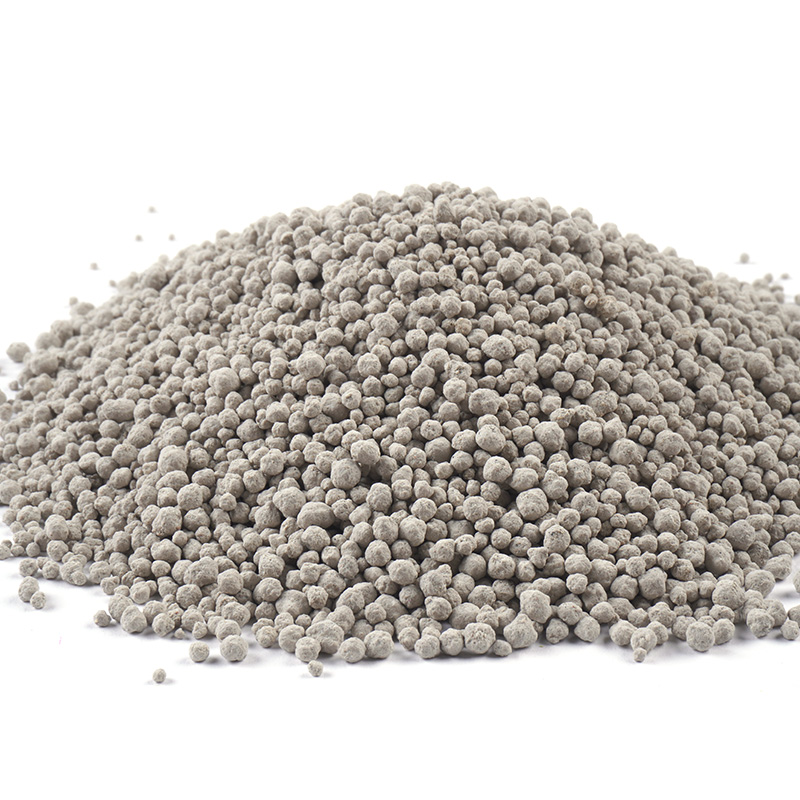 SGS Certified Spherical Bentonite Cat Litter for OEM Private LabelSGS certified spherical bentonite cat litter with ≥250% absorption, 3-second clumping, mixable with tofu litter; supports private label and batch density checks.View Product →
Grades differ in what they optimise, so it pays to compare shapes as well as numbers; the full bentonite cat litter range covers natural granular, spherical and high absorption options for private label programmes.
Clumping sodium bentonite litter typically pours at 0.75 to 0.90 g/cm3 on a loose bulk basis, with most premium grades landing between 0.78 and 0.85 g/cm3. Dense non-clumping mineral litters run higher, around 0.85 to 1.05 g/cm3.
No. Particle density measures the solid mineral and sits at roughly 2.4 to 2.6 g/cm3 for sodium bentonite. Bulk density measures the poured granule bed including the voids between granules, and lands near 0.80 g/cm3, so the two differ by a factor of about three.
Not directly. Clump hardness comes from swelling capacity, surface area and granule integrity. A denser litter packs more clay into each clump, but density created by excess fines or moisture tends to produce brittle, pasty clumps instead.
Between about 7.5 kg and 9.0 kg at retail density, depending on the poured bulk density. At 0.80 g/cm3 a ten litre fill holds eight kilograms; at 0.70 g/cm3 it holds seven.
Bottom line: treat density as a process variable, quote it with a method, and use it to price freight rather than to impress a buyer.
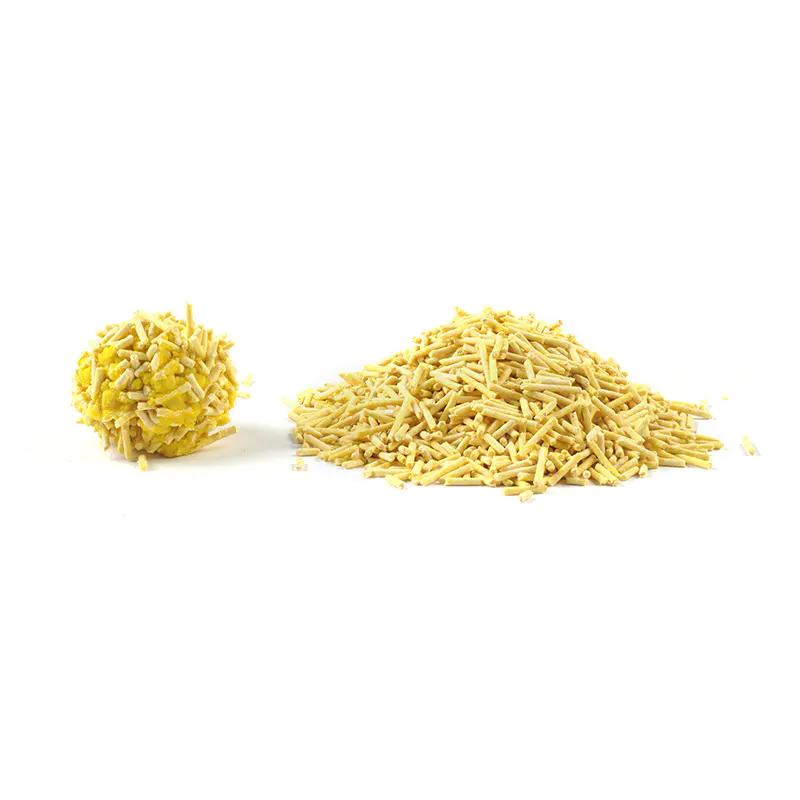
Tofu Cat Litter
Tofu Cat Litter
Mixed Cat Litter
Mixed Cat Litter
Bentonite Cat Litter


Got Questions? Call us 24/7

+8615263229311
No.88, Quandu Road, Xigang Town, Tengzhou City, Shandong, China. (Sincere Industrial Park)
OEM Cat Litter Manufacturers Bulk Cat Litter Wholesale Biodegradable Cat Litter Company



 English
 русский
 Español
 日本語
日本語 한국어
한국어


