
Industry News
Content
A three-month-old bag of pure tofu litter can start feeling less convenient and more like a compromise. The clumps still hold, but ammonia odor builds faster when the weather turns humid. Switch to pure bentonite and the odor problem is solved, yet fine dust coats the litter box lid and grains follow your cat through the house. That exact experience is what pushed mixed cat litter from a niche experiment to a mainstream option.
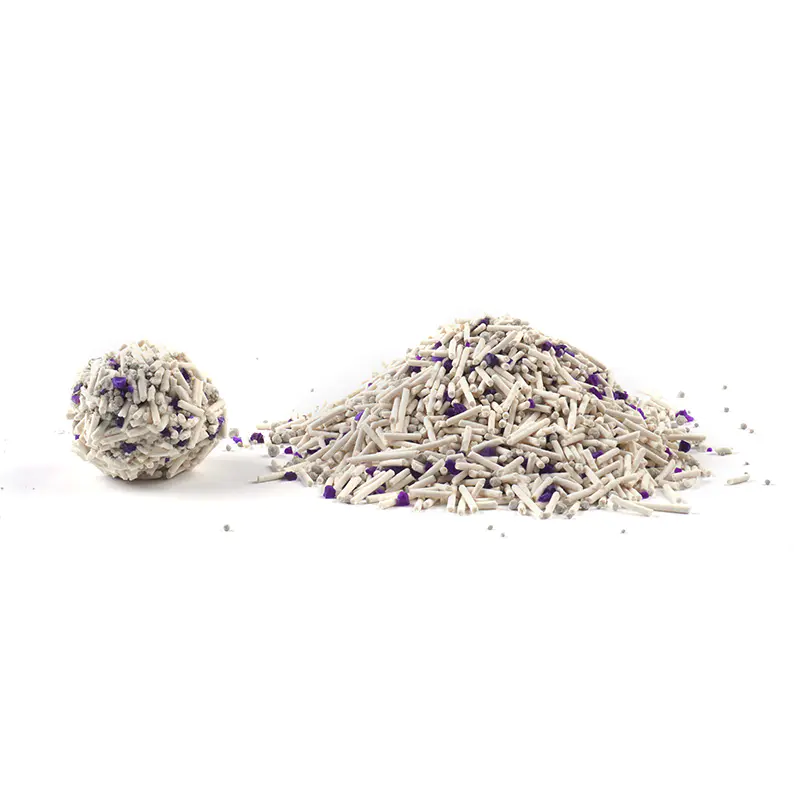
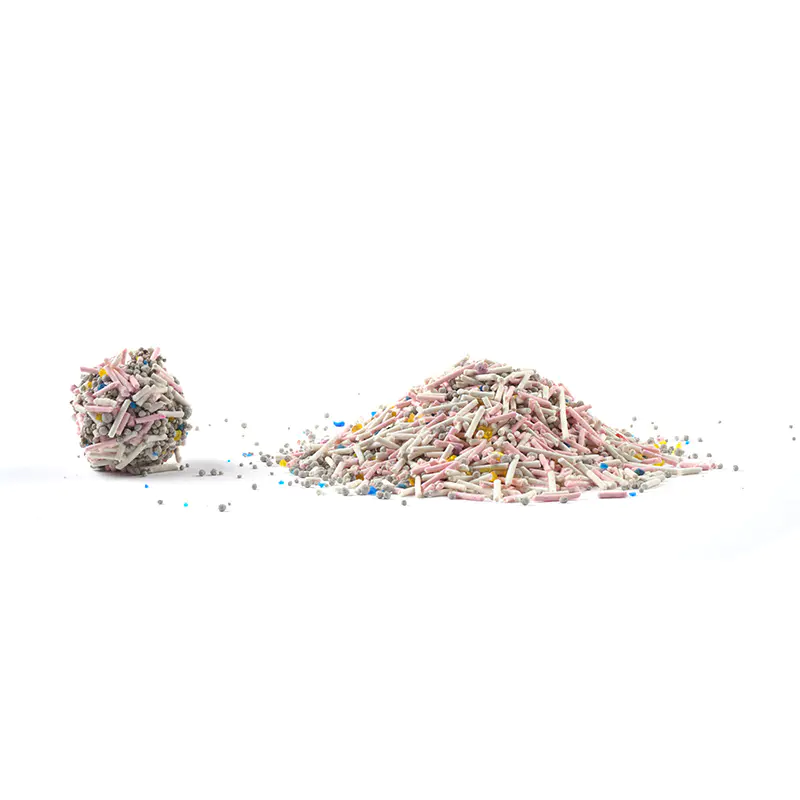
Mixed cat litter combines two or more materials in a single formula, usually some combination of tofu, bentonite, crystal, mineral granules, or plant fiber. The idea is simple: the strengths of one material cover the weaknesses of another. For most households, a well-formulated mix clumps faster than pure tofu, tracks less than pure bentonite, and controls odor longer between scoops. The real question is not whether mixed litter works, but which blend fits your cat, your home, and your climate.
Mixed cat litter is manufactured by blending two or more litter materials into one uniform product. This is different from pouring two litters into the same box yourself. When a manufacturer produces a mixed formula, the particles are distributed evenly, fragrance and moisture levels are balanced during production, and the ratio between materials stays consistent from the first bag to the last. That consistency is what separates a deliberate formulation from a DIY experiment.
Common blend families include:
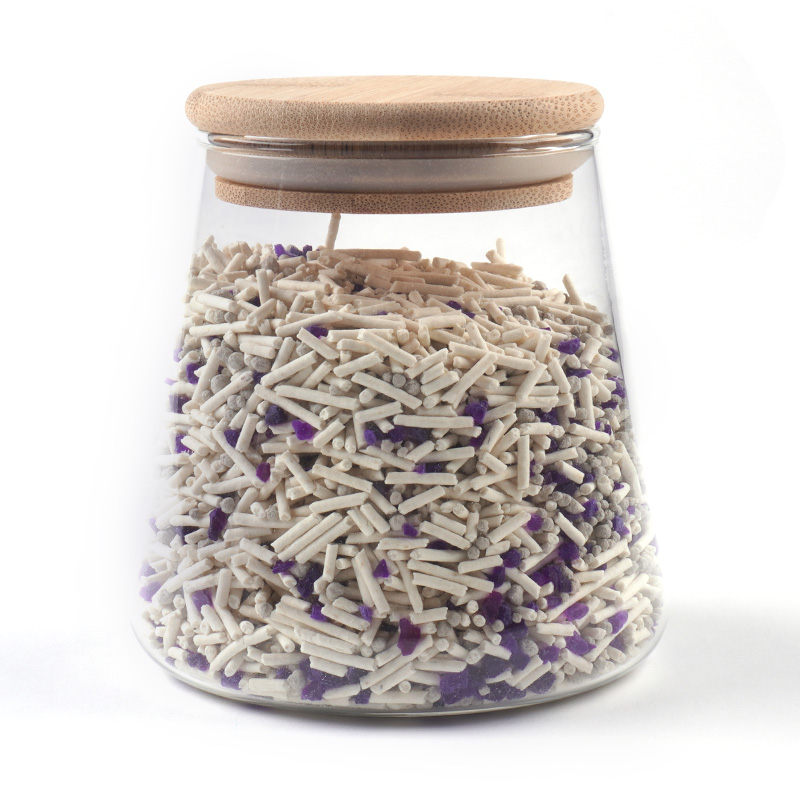 SGS Certified Mixed Cat Litter | Tofu Bentonite Crystal Blend Wholesale SupplierSincere: China Wholesale SGS Certified Mixed Cat Litter | Tofu Bentonite Crystal Blend Wholesale Supplier Suppliers and Company, Custom S...View Product → is a direct example of this concept.
A practical detail is worth repeating: the ratio determines the behavior. A mixture with 80 percent bentonite behaves almost like pure bentonite. A mixture with 70 percent tofu behaves like tofu, including its slower response to humidity. When a label does not state the ratio, treat that as a warning and ask the manufacturer for the exact breakdown.
Single-material litters force an either-or choice. Pure bentonite is a fast and powerful absorber, but it is dusty, heavy, and not biodegradable. Pure tofu is clean and flushable, but its clumps can soften in humid conditions and it struggles with very large urine volumes. Pure crystal litter controls odor impressively, but some cats dislike the texture and it does not clump at all. A mixed formula removes the need to pick one set of tradeoffs.
| Material | Strength in a blend | Weakness when used alone | Role in mixed litter |
|---|---|---|---|
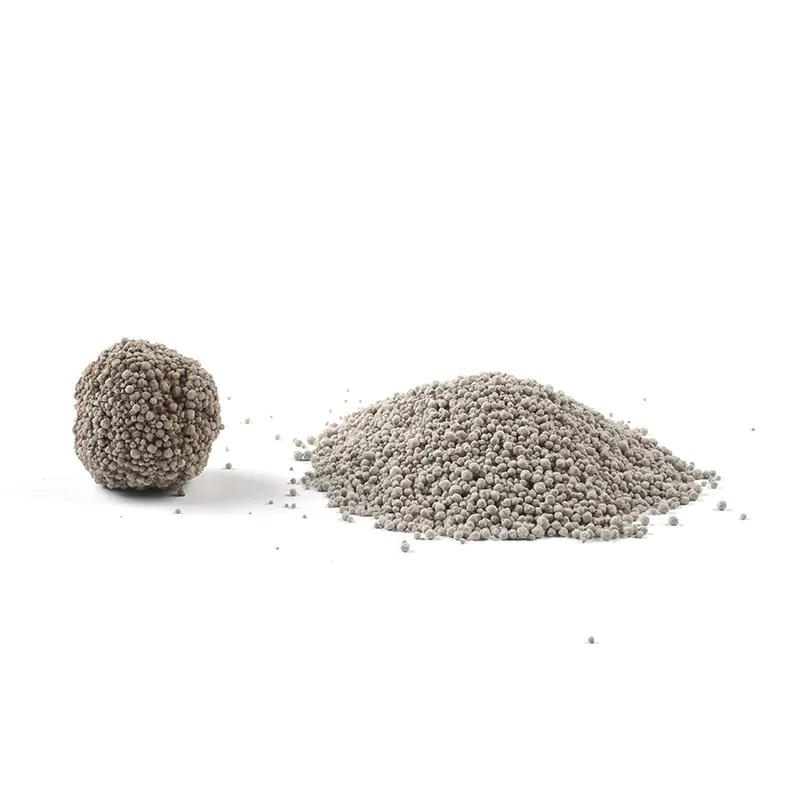
| Bentonite | Absorbs urine within seconds; strong ammonia control | Dusty; tracks; not biodegradable | Clumping speed and odor reinforcement |
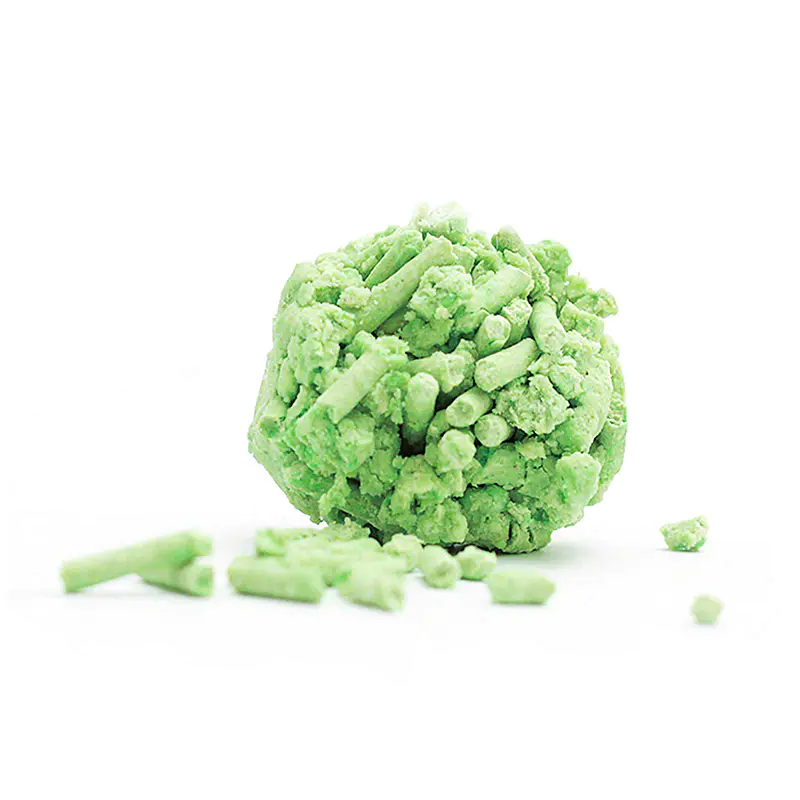
| Tofu / plant fiber | Firm clumps; flushable; low dust; biodegradable | Softens in humidity; heavier | Main clumping base |
| Crystal / silica | High liquid capacity; long odor control | No clumping; texture can bother some cats | Liquid absorption and odor extension |
| Mineral granules | Hard texture; low dust; reduces tracking | Weak clumping by itself | Structure and low-dust dilution |
The table above shows the logic behind each blend. The goal is to keep the clumping strength of plant fiber, add the speed of bentonite or the capacity of crystal, and reduce dust and tracking at the same time.
Clumping is a race between the litter and the liquid. When urine lands, the outer surface of each granule absorbs it and expands. Bentonite reacts almost instantly, while tofu takes a little longer to form a solid mass. In a mixed formula, the fast-absorbing material catches the urine first, and the plant-based component locks it into a firm clump. The result is a clump that holds together when scooped instead of crumbling at the edges.
Urine odor comes mainly from ammonia, while feces odor is produced by a different set of bacteria. No single material is equally strong against both. Bentonite and silica trap ammonia inside their structure, and plant-based materials can carry antibacterial additives that slow bacterial growth. A blended litter therefore fights odor with two mechanisms at the same time. This is why the deodorizing antibacterial mixed cat litter from Sincere pairs odor-neutralizing ingredients with water-absorption reinforcement: the two functions support each other in daily use.
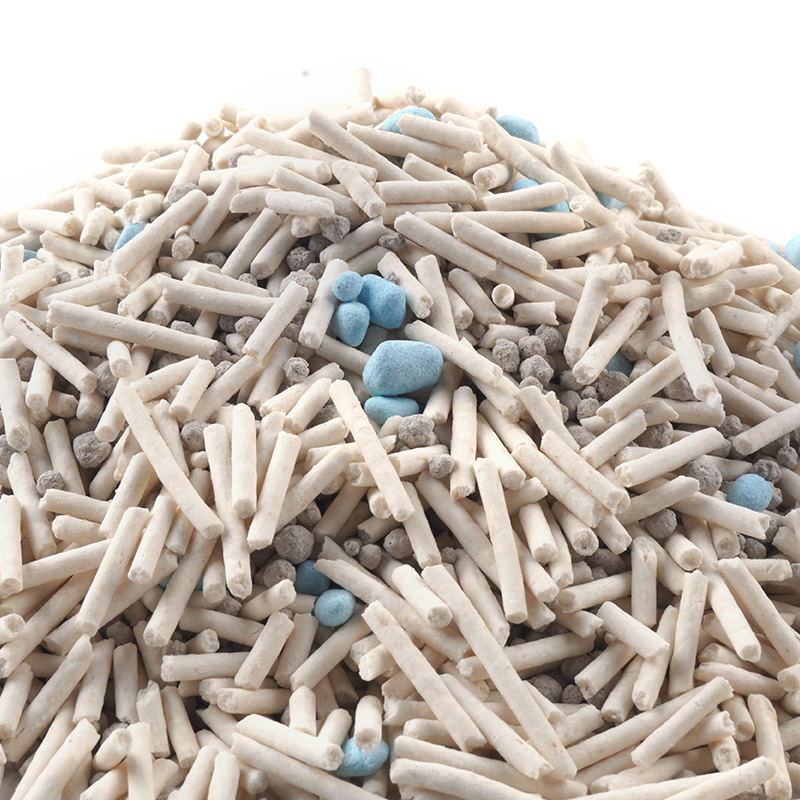 Sincere SGS-Certified Activated Charcoal Mixed Cat Litter Suppliers, Company - SSincere: China Wholesale Sincere SGS-Certified Activated Charcoal Mixed Cat Litter Suppliers and Company, Custom Sincere SGS-Certified Ac...View Product →
Dust is not just a cosmetic annoyance. When a cat digs, fine particles float into the air, and repeated exposure is a legitimate concern for owners and for cats with respiratory sensitivity. Plant-based components such as tofu and cassava generate far less dust than clay. A mixed formula sits between the two: tofu-heavy blends are noticeably cleaner, while bentonite-heavy blends still raise dust. If respiratory health is a priority, choose a mix where plant fiber or mineral granules dominate.
Tracking follows the same logic. Small clay particles lodge between paw pads and scatter across the floor. Larger tofu or crystal granules fall off quickly at the edge of the box. A blend that includes larger particles cuts down on the grains you find on the carpet.
If you are still deciding between categories, the complete guide to mixed cat litter benefits, types, and selection covers each formula family in more depth.
Tofu absorbs moisture from the air, not just from urine. In coastal areas or during rainy seasons, a pure tofu box can turn sticky and clumps can soften overnight. Adding bentonite, crystal, or mineral granules reduces that humidity sensitivity. In humid conditions, a mixed formula keeps clumps firmer and the litter texture drier for longer.
Every additional cat raises the daily urine volume and the ammonia load. Blends with bentonite or crystal content absorb larger amounts of liquid before saturation. In multi-cat homes, mixed litter generally outlasts pure tofu, and odor-neutralizing performance holds longer between full litter changes.
Robot litter boxes need clumps that harden quickly and do not stick to the liner. Some mixed formulas with higher bentonite content meet that requirement better than soft tofu-only clumps. If you use an automatic box, check clumping speed specifications instead of assuming that every mixed formula works.
The volume and frequency of urination also matter. A single large accident from a senior cat demands quick absorption capacity, while frequent small visits from a kitten test clump durability. Mixed litters with a higher mineral or bentonite share handle the first case; tofu-heavy blends with strong binders handle the second.
Not every product called "mixed" deserves the name. Some blends are cheap bentonite with a small amount of plant fiber added for the label. The following points separate a genuine formulation from a marketing mix:
A practical way to evaluate a mixed litter is to run a two-week trial with the exact product you intend to buy. Watch clump firmness, how much litter ends up on the floor, and how quickly odor returns after scooping. Real conditions reveal what the label does not say.
For retailers and pet brands, mixed litter is also a product-development opportunity. The ratio of tofu to bentonite, the granule size, the scent profile, and the biodegradable content can all be tuned to a target market. But formulation is not the same as production. A reliable manufacturer controls particle distribution, dust levels, and moisture consistency across every batch, not just in a lab sample.
This is where custom OEM formulation services come into play. A supplier with experience in plant-based and mineral litters can translate a simple concept into a repeatable manufacturing specification. At Sincere Pet Products, mixed cat litter is produced with the same quality controls as our tofu, bentonite, and crystal lines. Our facility has an annual capacity of 200,000 tons of plant-based and silica gel litter, which allows us to supply consistent volume to large retail programs.
The natural ecofriendly antibacterial mixed cat litter is one example of a formula designed for cost-effectiveness without sacrificing antibacterial or deodorizing performance. For buyers evaluating a private-label supplier, we always recommend testing a production sample in real humidity conditions before committing to a large order.
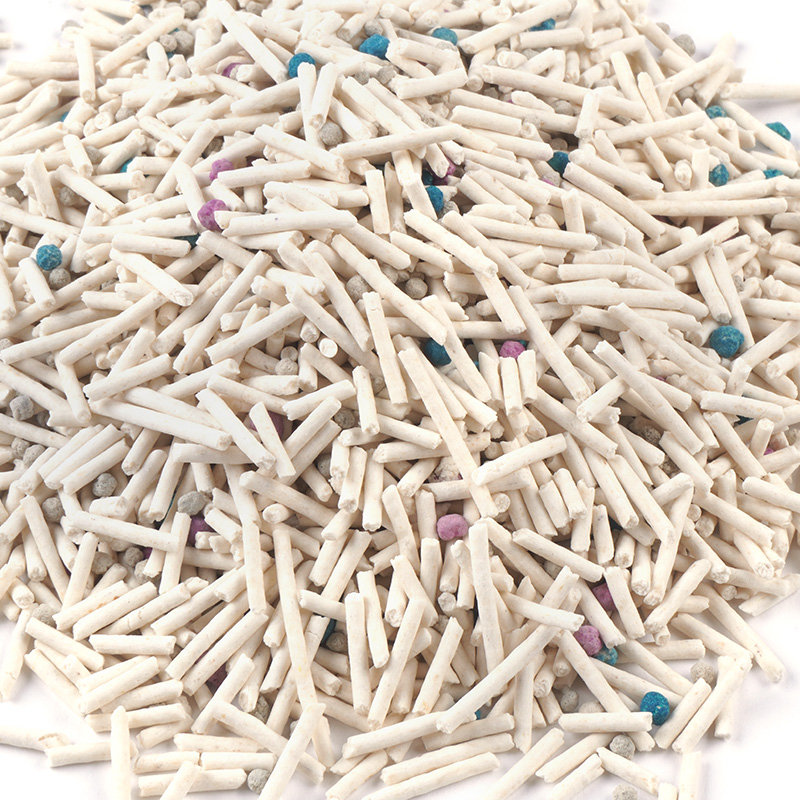 Natural Eco-friendly , Antibacterial Deodorizing , Strong Absorption , Cost-effeSincere: China Wholesale Natural Eco-friendly , Antibacterial Deodorizing , Strong Absorption , Cost-effective , Mixed Cat Litter Supplie...View Product →
Mixed cat litter is not a diluted version of a single material. It is a deliberate attempt to build a better daily product by combining compatible strengths. The right blend gives you tofu-like clumping, bentonite-class ammonia control, and lower dust than either material alone. The wrong blend gives you an unstated ratio, inconsistent performance, and a bag that behaves differently in every season.
Start with the ingredient ratio, verify dust and clumps, and match the formula to your humidity, your cat's preferences, and the number of cats in the home. If you are sourcing for a brand or a retail chain, make batch consistency a condition, not a hope.
Tofu Cat Litter
Tofu Cat Litter
Mixed Cat Litter
Mixed Cat Litter
Bentonite Cat Litter


Got Questions? Call us 24/7

+8615263229311
No.88, Quandu Road, Xigang Town, Tengzhou City, Shandong, China. (Sincere Industrial Park)
OEM Cat Litter Manufacturers Bulk Cat Litter Wholesale Biodegradable Cat Litter Company



 English
 русский
 Español
 日本語
日本語 한국어
한국어


